Project detail
Firefly is a sensory-driven connection app designed to bridge the emotional gap for long-distance families through "Quiet Design" and personalized daily rituals.
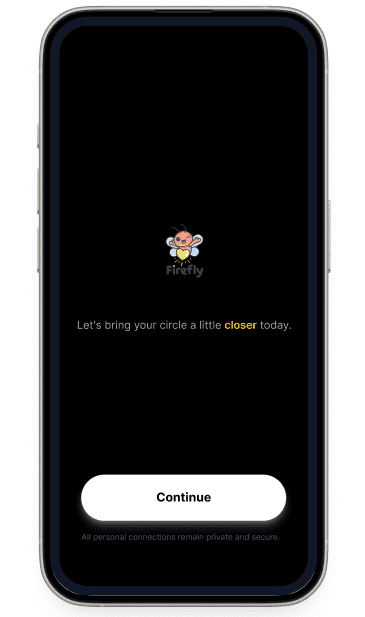

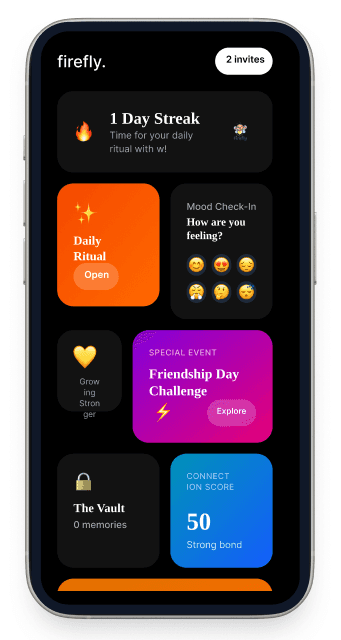
The Inspiration Living away from family often means our digital interactions become transactional—checking in feels like a chore, and constant notifications add to "digital noise." I built Firefly to transform these interactions into a digital hearth. Inspired by the philosophy of "Quiet Design," Firefly focuses on a single, meaningful signal of presence: a soft, glowing light that represents your shared bond.
What it Does Firefly centers around the "Daily Ritual," a one-minute shared experience designed for specific relationship types.
Relationship-Specific Modes: Whether it’s a "Sibling Mode" focused on nostalgia or a "Family Mode" focused on daily support, the app adapts its tone and prompts.
The Firefly Glow: A visual representation of your connection. As you complete rituals, your firefly grows brighter; if you miss a day, the light gently dims rather than using high-pressure "streak" tactics.
Bento-Style Dashboard: A modular, minimalist layout that provides a calm, organized view of your most important connections without the clutter of traditional social feeds.
How We Built It The project was a deep dive into advanced design engineering within Figma.
Prototyping with Logic: We utilized Figma Variables and Conditional Logic to create a "smart" prototype that remembers user inputs and adjusts the UI theme dynamically based on the relationship selected.
AI-Augmented Workflow: I integrated Generative AI as a collaborative partner. Figma Make was used to rapidly ideate layouts, while Gemini helped craft the empathetic content strategy and the relationship-specific ritual prompts.
Sensory Mechanics: Using Smart Animate, we crafted fluid transitions that mimic a breathing rhythm, ensuring every tap feels warm and intentional rather than mechanical.
The Impact Firefly moves technology out of the way and puts the human connection back at the center. By focusing on emotional utility rather than just feature density, we’ve created a space where distance doesn't just feel manageable it feels like an opportunity for a more meaningful, intentional connection.